Initial Margin vs. Maintenance Margin in Perpetual Futures
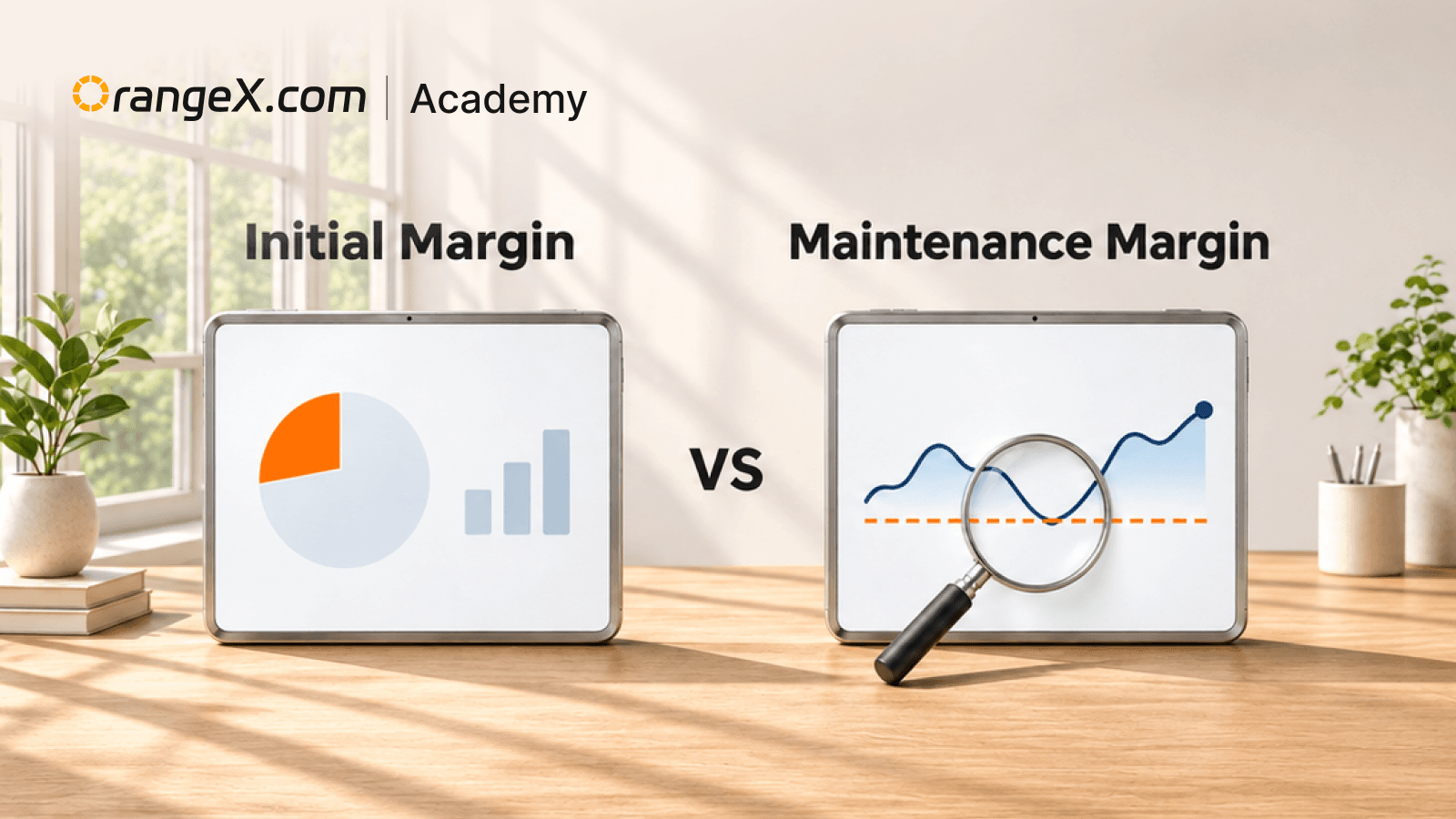
Initial margin is the collateral required to open or support a leveraged position at the selected leverage. Maintenance margin is the minimum equity requirement for keeping the position open. Falling below the maintenance requirement can trigger liquidation, so the two figures serve different stages of the trade.
Estimate initial margin from notional value
A simplified relationship is:
initial margin = position notional ÷ selected leverage
For a hypothetical 10,000 USDT position at 10× leverage, the simplified initial margin is 1,000 USDT. At 20×, it is 500 USDT. These figures exclude fees, funding, buffers and contract-specific rules.
Higher selected leverage reduces the initial margin for the same notional exposure; it does not reduce the price exposure itself. Review how leverage changes position size and risk before comparing leverage settings.
Maintenance margin protects the open position
Maintenance margin is calculated under the platform's risk model and can depend on notional value, contract and risk tier. Larger positions may face a higher maintenance-margin rate or a lower permitted maximum leverage. OrangeX.com publishes current formulas and tiers in its leverage and margin parameters.
If unrealized losses and costs reduce position equity toward the maintenance requirement, the liquidation process may begin. Maintenance margin is therefore not spare cash that can safely be lost; it is an operating threshold.
Why the displayed values can change
Adding to a position changes notional value and can move it into another risk tier. Changing leverage changes initial-margin allocation. Funding payments, trading fees, realized profit or loss and manually added or removed margin can also affect account equity.
In cross margin, other positions and shared collateral can influence risk. In isolated margin, collateral is assigned to one position, although platform rules still determine liquidation. The cross-margin and isolated-margin comparison explains the structural difference.
Mark price can be used for risk calculations even when the last traded price is different. Always read the current position panel rather than estimating liquidation from a chart alone.
Separate margin from planned risk
The amount required to open a trade is not the same as an acceptable loss. A position can meet initial-margin requirements while being too large for the trader's risk budget. Plan the maximum loss, exit conditions and total portfolio exposure independently.
Liquidation is also not a stop-loss strategy. The liquidation guide explains why a system-triggered close can involve market conditions, fees and slippage that differ from a planned exit.
Common questions
Does more initial margin increase profit?
Not by itself. Profit and loss depend mainly on notional exposure and price movement. Extra margin can change the liquidation buffer.
Can maintenance margin stay fixed?
Do not assume so. Position size, tier, contract rules and account changes can alter it.
Is the liquidation price guaranteed?
No. It is an estimate under current inputs and rules. Market gaps, costs and changes to the position can affect the outcome.