Bitcoin vs Gold: A Clear Comparison
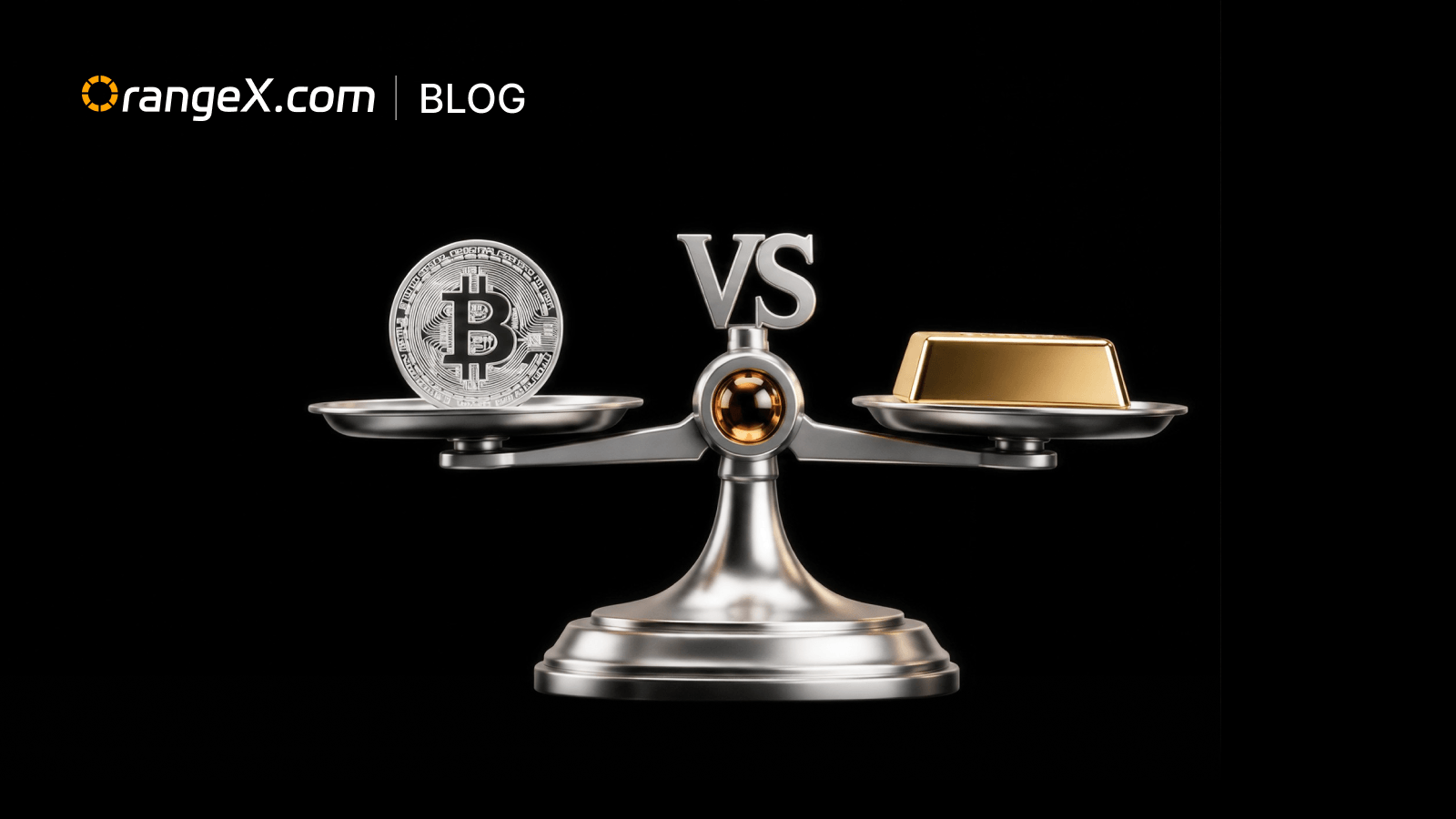
Both Bitcoin and gold are frequently discussed as stores of value and hedges against currency debasement or economic uncertainty. They share the trait of relative scarcity, but differ sharply in nearly every other practical dimension.
Current Snapshot
| Metric | Bitcoin | Gold |
|---|---|---|
| Price | ~$80,000 | ~$4,420–$4,480 per troy ounce |
| Market Cap | ~$1.60–1.61 trillion | ~$29–31 trillion (all above-ground gold) |
| Bitcoin/Gold Ratio | 1 BTC ≈ 18 ounces of gold | — |
| Supply | Hard-capped at 21 million | ~220,000–222,000 tonnes mined so far |
| Annual New Supply | ~0.8% (declining with halvings) | ~1.5–1.7% |
| Age as Asset | ~17 years | 5,000+ years |
Gold’s total market value is roughly 18–20 times larger than Bitcoin’s. Bitcoin remains a much smaller, higher-growth asset class by comparison.
Core Properties Side by Side
Scarcity
Bitcoin has a mathematically fixed maximum supply of 21 million coins, enforced by network consensus. New issuance halves roughly every four years and will approach zero around 2140. Gold’s supply grows through mining (typically 1.5–1.7% per year) and is limited by geology and economics rather than a hard code-based cap.
Volatility
Bitcoin remains significantly more volatile. Recent periods show Bitcoin’s annualized volatility roughly 1.4–2.5× that of gold (though the gap has narrowed from earlier years when it was 5× or higher). Gold’s price moves are generally smoother, with maximum historical annual declines far smaller than Bitcoin’s multi-year 70–80%+ drawdowns.
Portability & Transfer
Bitcoin can be sent globally in minutes (or seconds via second-layer solutions) at relatively low cost, with no physical transport required. Gold requires secure shipping, insurance, and physical handling, making large transfers slower and more expensive.
Divisibility
Bitcoin is divisible to 100 million units (satoshis) per coin, making tiny transactions practical. Gold is less convenient below roughly one gram in everyday use.
Verifiability & Custody
Anyone can independently verify Bitcoin’s total supply and ownership on the public ledger. Self-custody (holding your own keys) eliminates third-party risk if done correctly. Gold requires physical assay or trusted vaulting; storage and insurance carry ongoing costs (often 0.1–0.5%+ per year).
Censorship Resistance
Bitcoin’s digital nature and decentralized network make seizure or blocking more difficult when properly self-custodied. Physical gold can be confiscated, restricted, or subjected to capital controls more readily.
Track Record & Adoption
Gold has thousands of years as money, jewelry, and a central-bank reserve asset. Central banks still hold large quantities. Bitcoin has a much shorter history but has achieved rapid institutional adoption, regulated investment products, and growing recognition as “digital gold” among some investors and even some sovereign entities.
Performance Context
Over very long periods (10+ years), Bitcoin has delivered far higher absolute returns than gold, accompanied by much larger drawdowns.
In shorter or more recent windows (especially periods of elevated macroeconomic stress or rate uncertainty), gold has often provided more stable or superior risk-adjusted performance.
Correlation between the two has varied. At times they move together as “hard money” assets; at other times Bitcoin behaves more like a high-beta risk asset correlated with equities and liquidity conditions.
Practical Takeaways for Investors
Gold tends to excel as a lower-volatility ballast and traditional safe-haven holding. It is widely understood, physically tangible, and has deep institutional and central-bank support.
Bitcoin offers higher potential upside and superior digital properties (portability, divisibility, verifiability, fixed supply), but with substantially greater price swings. Many view it as a higher-risk, higher-reward complement rather than a direct replacement.
A common approach is to hold both in different proportions according to risk tolerance and time horizon: gold for stability and historical reliability, Bitcoin for asymmetric growth potential tied to digital scarcity and network adoption.
Neither asset produces cash flow or dividends. Both can experience prolonged periods of underperformance relative to other assets. Allocation decisions should reflect personal risk capacity, investment horizon, and overall portfolio needs rather than treating either as a guaranteed hedge.
Data approximate as of early September 2026 and subject to rapid change. This is educational comparison only and not investment advice.