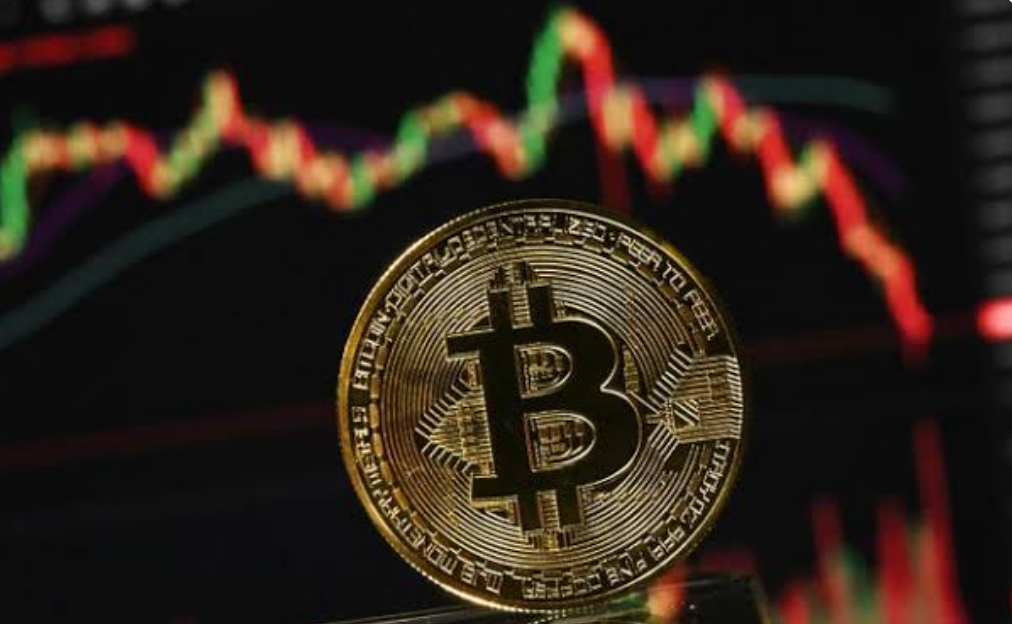
Fed Hike Shock: BlackRock Leads $746 Million Bitcoin ETF Exodus

Market searches for a new equilibrium between a hawkish Fed pivot and the structural fragility of ETF flows
The Federal Reserve's first rate hike in three years delivered the most concentrated stress test yet to the bitcoin ETF channel Wall Street built to bring institutional money into crypto.
On September 16, the FOMC voted 12-0 to raise the benchmark rate by a quarter point to a range of 3.75%–4.00%. It was the first increase since July 2023 and the first policy action under new Fed Chair Kevin Warsh. Bitcoin slipped below $76,000 on the decision before trading at roughly $76,600 on Thursday afternoon, up about 1.2% over 24 hours.
The Double-Edged Sword of ETFs
The channel built to let money in has become the channel through which pressure is transmitted.
According to Farside Investors data, U.S. spot bitcoin ETFs recorded a net $450.4 million outflow on Tuesday — their largest single-day exit since June 24 — followed by another $295.9 million on Wednesday. That totals $746.3 million in two sessions. BlackRock's iShares Bitcoin Trust (IBIT) shed $161.7 million on Tuesday and $144.1 million on Wednesday, the largest redemption of any fund over the two days. Fidelity's FBTC lost $214.8 million on Tuesday alone.
Amid the selling, Morgan Stanley's MSBT was the only bitcoin fund to report an inflow on Wednesday, taking in $3.5 million. Ether ETFs also came under pressure, losing $224.1 million on Wednesday with no fund reporting an inflow.
The timing is notable. In August, these same funds were the story — BlackRock's buying spree carried bitcoin toward $80,000. Since launching in January 2024, bitcoin ETFs have still taken in roughly $54.6 billion net.
Why This Hike Hurt More Than Usual
What made the Fed's move particularly damaging was not the hike itself, but the strength of the signal behind it.
The 25-basis-point increase was widely priced in — CME FedWatch showed odds above 90%. What hit risk assets was the dot plot: 16 of 18 officials expect at least one more hike by the end of 2026, with four projecting two. Interest-rate swaps implied even more tightening than the median official forecast.
Warsh reinforced the hawkish tone at his press conference, saying it is "hard to describe overall financial conditions as restrictive" and that the committee had "taken back a dose of easing." The remarks pushed the two-year Treasury yield to 4.734%, while the S&P 500 fell about 0.7% and the Dow Jones Industrial Average dropped 1.2%.
For bitcoin, higher risk-free rates directly erode the appeal of a non-yielding asset. When the 10-year Treasury yield breaks above 5% — a level last seen in 2007 — the opportunity cost of holding bitcoin becomes hard to ignore.
Leverage Flush Preceded ETF Outflows
Crucially, the ETF redemptions were not an isolated event but part of a broader deleveraging.
CoinGlass data showed 150,510 traders were liquidated within 24 hours around the Fed decision, involving $1.83 billion. Martin Lee, head of market insights at DWF Labs, noted that fragile short positions were concentrated in the $75,000–$76,000 range.
Glassnode's Week 37 on-chain report provided deeper context: four demand indicators weakened simultaneously. Realized cap turned negative for the first time after 27 days of growth. U.S. spot bitcoin ETFs saw $753.2 million in outflows between September 8 and 15, reversing roughly $770 million of inflows from early September. Corporate treasury purchases slowed to 5,900 BTC over the past three months, and those buyers' average cost basis of $80,500 now forms overhead resistance.
The data echoes an earlier assessment from Bruno Caratori, co-founder and global CEO of ETF issuer Hashdex, who called the bitcoin ETF "the product that was fastest to get to a hundred billion dollars in assets under management." But as Michael Terpin, founder and CEO of Transform Group, put it: "ETFs are not permanent capital."
Why $76,000 Held
Despite $746 million in ETF redemptions over two days and more than $1.8 billion in leveraged liquidations, bitcoin showed resilience around $76,000.
The trading range offers clues. In the 24 hours after the decision, bitcoin traded between roughly $75,350 and $76,600. The absorption of spot selling pressure suggests buyers exist outside the ETF channel.
This aligns with what Glassnode observed in August, when it warned that buyers were absent yet the price held anyway. Roman Prudnikov's earlier argument — that "ETFs today may have a greater impact on the depth of the correction than on the rate of growth" — is being tested in this week's price action.
Prediction markets are not pricing extreme further tightening. Polymarket traders on Thursday put a quarter-point increase at the October meeting at 46.5%, with a December hike at 67.5%. Two hikes for the full year was the favorite scenario at 63.5%. That is a long way from the liquidity hole traders feared in August.
What to Watch
In the near term, the Farside flow table will be the first read on whether this is a two-day flinch or the start of a redemption cycle.
The deeper signal lies in the Fed's next move. The dot plot points to a year-end rate of 4.1%, a 4%–4.25% range in 2027, and inflation not returning to the 2% target until 2029. If that path materializes, bitcoin will have to prove its value proposition in a persistently tight monetary environment.
For the institutional money that entered through ETFs, that may be where the real test begins.
Related Reports

Kashkari Says Inflation Pressure Extends Beyond Energy
The Minneapolis Fed president pointed to services inflation after September’s rate increase, while distinguishing monetary policy from energy supply disruptions.


Binance Wallet Details PancakeSwap Pre-Access Campaigns
New campaign rules distinguish tokenized private-company exposure from share ownership and tie allocation to wallet activity metrics.

WTI Oil Forecast: Iran's 7 Conditions Signal Downside Risk
WTI crude oil (USOIL) plunged 5.58% on Friday, closing at $95.46 per barrel, surrendering the $100 psychological threshold once again.